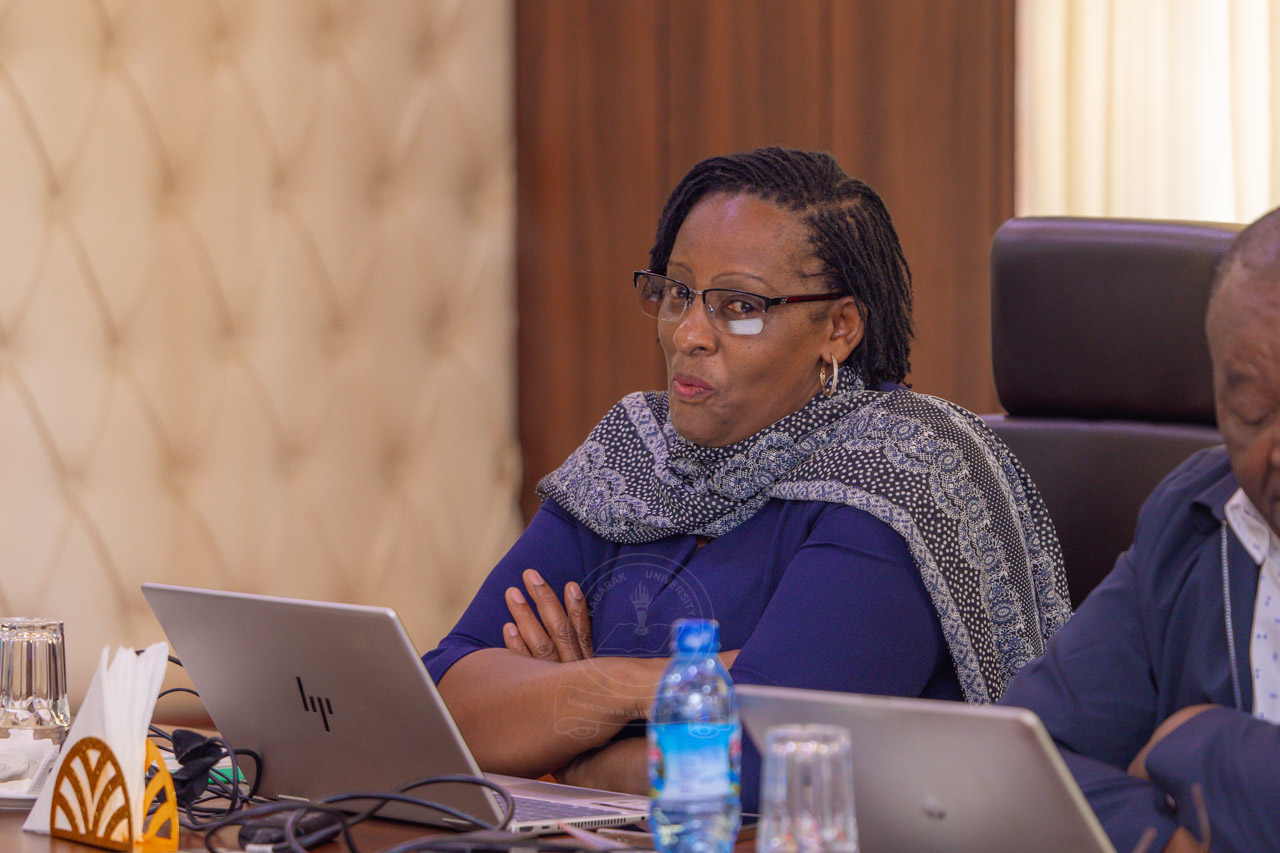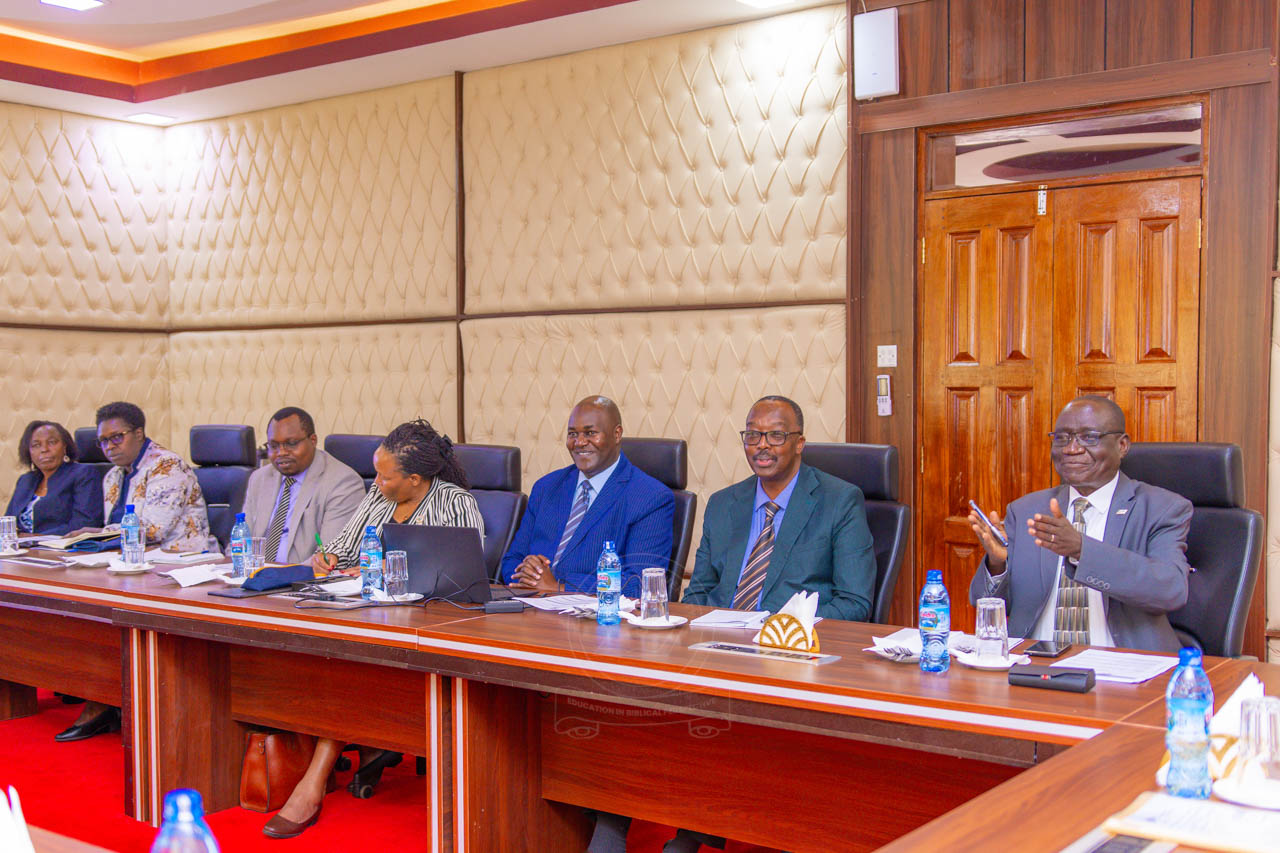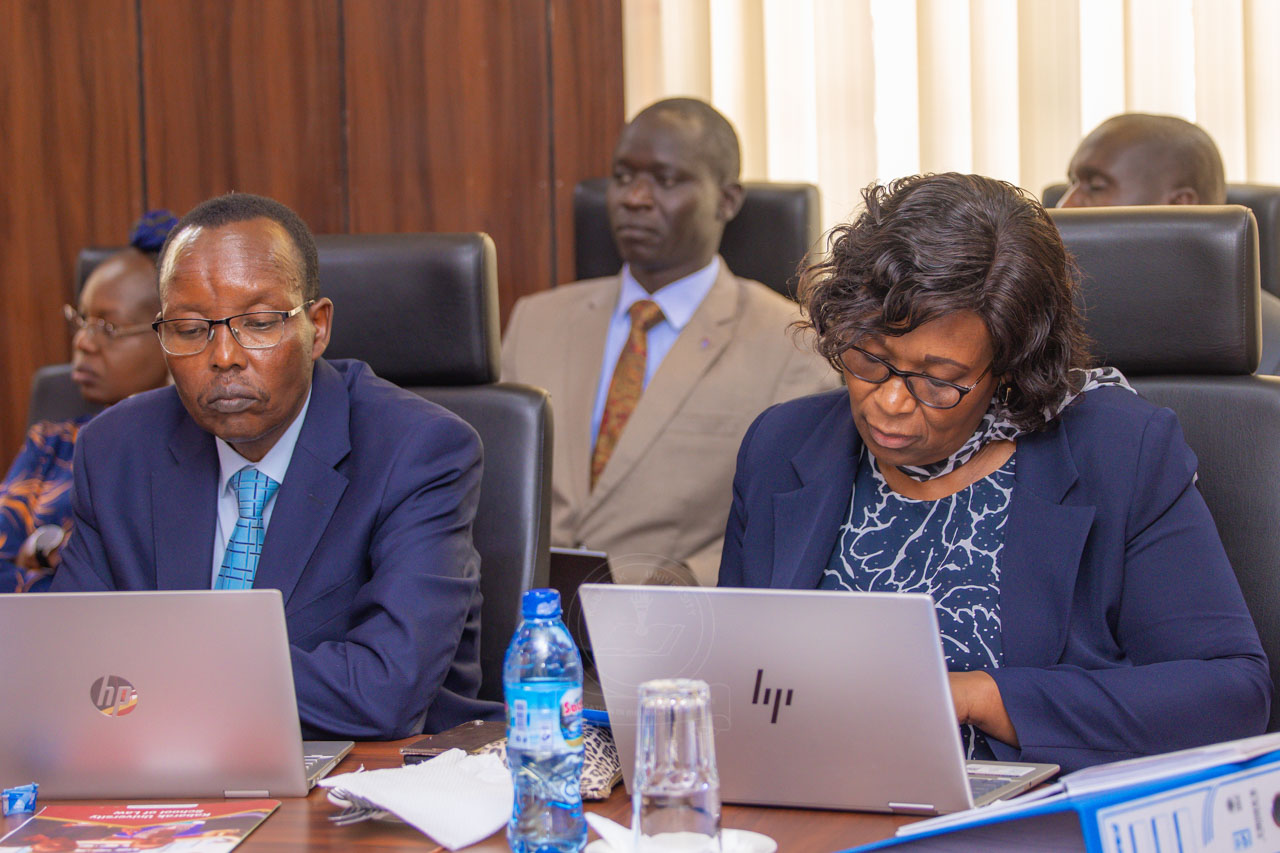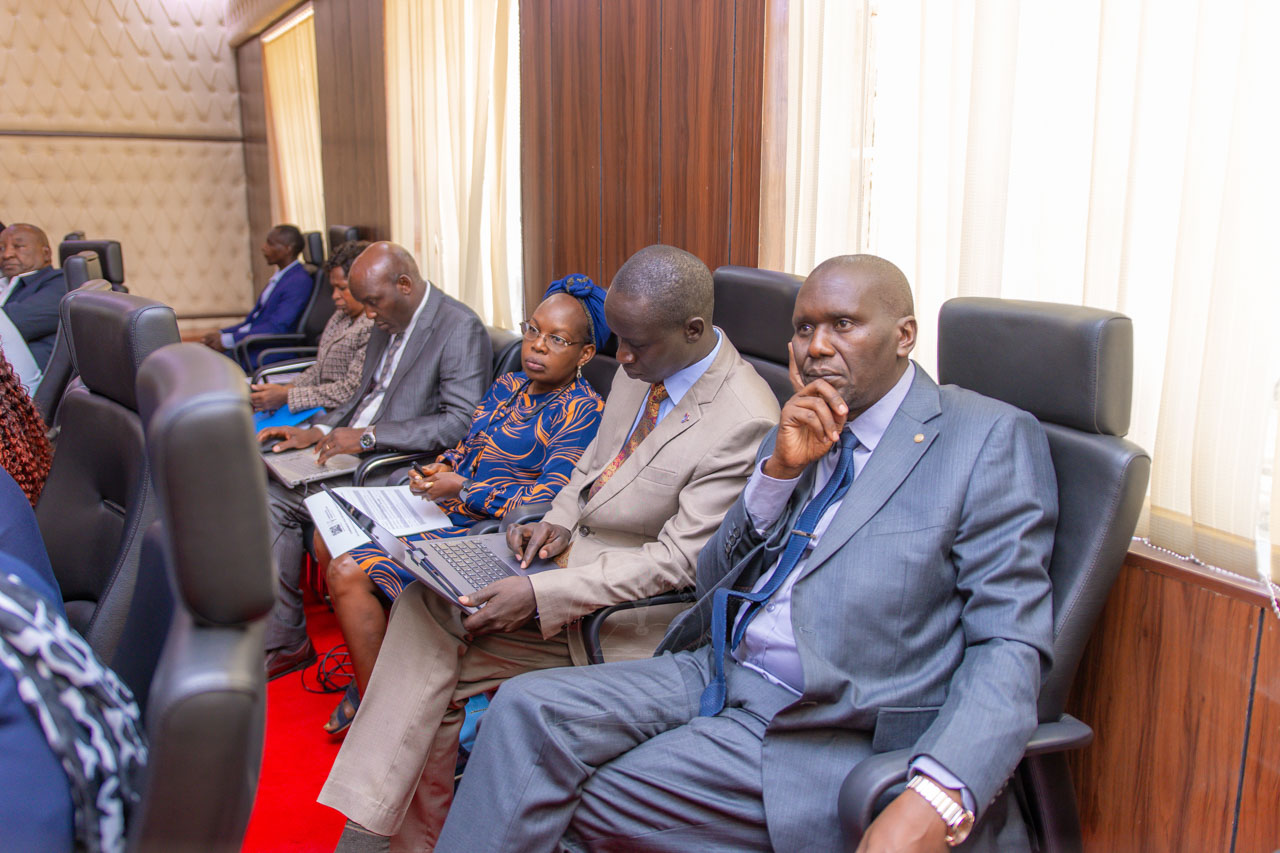

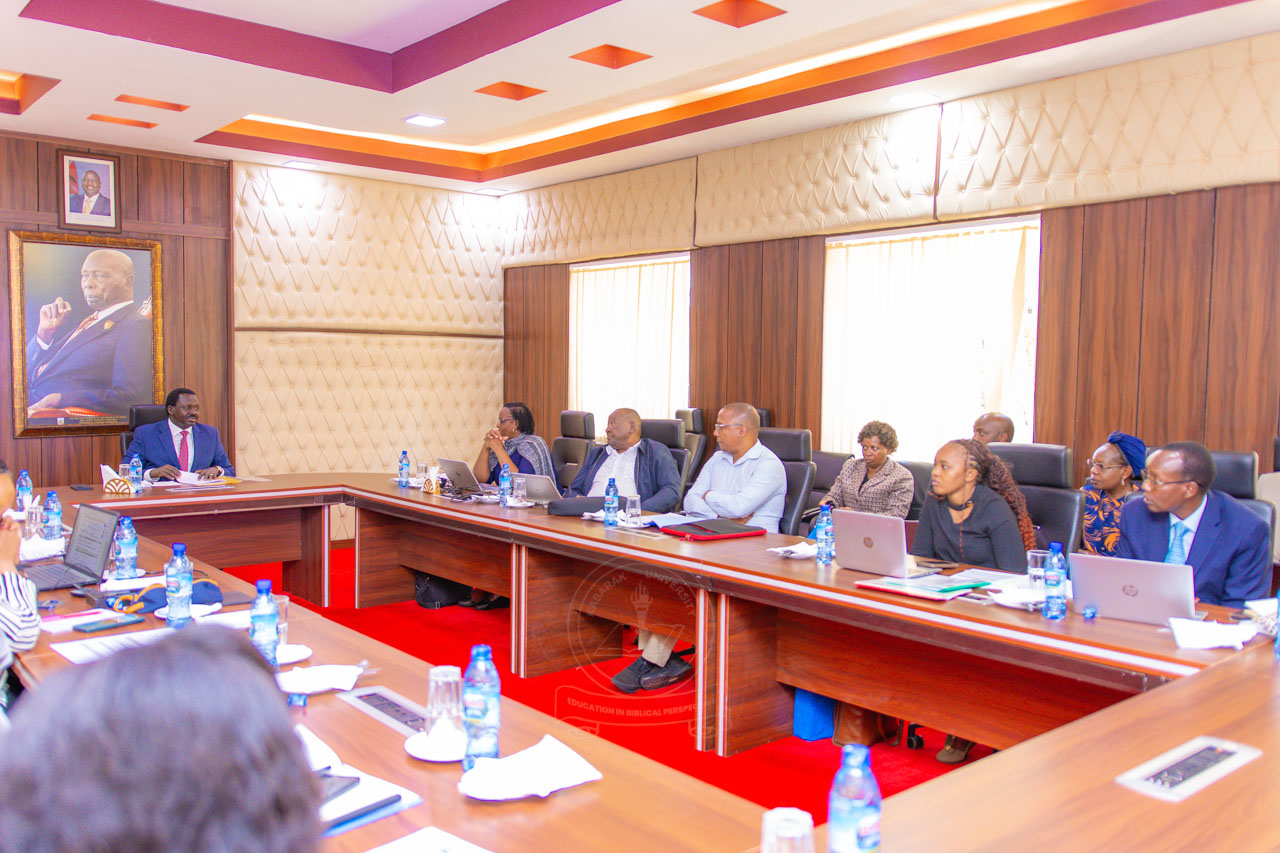
The Commission for University Education is assessing the academic resources available to support 15 proposed programmes, marking a significant milestone in the University's academic development and quality assurance process.
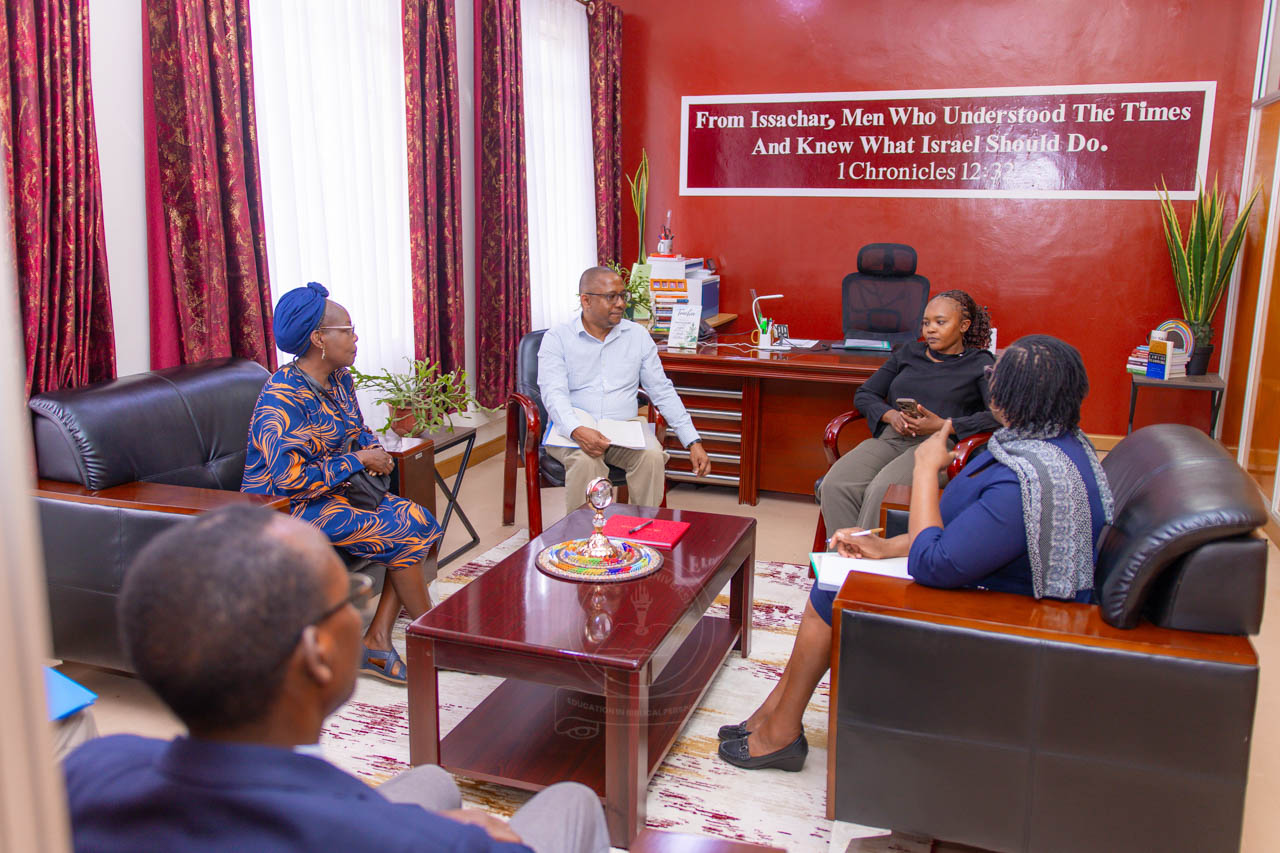
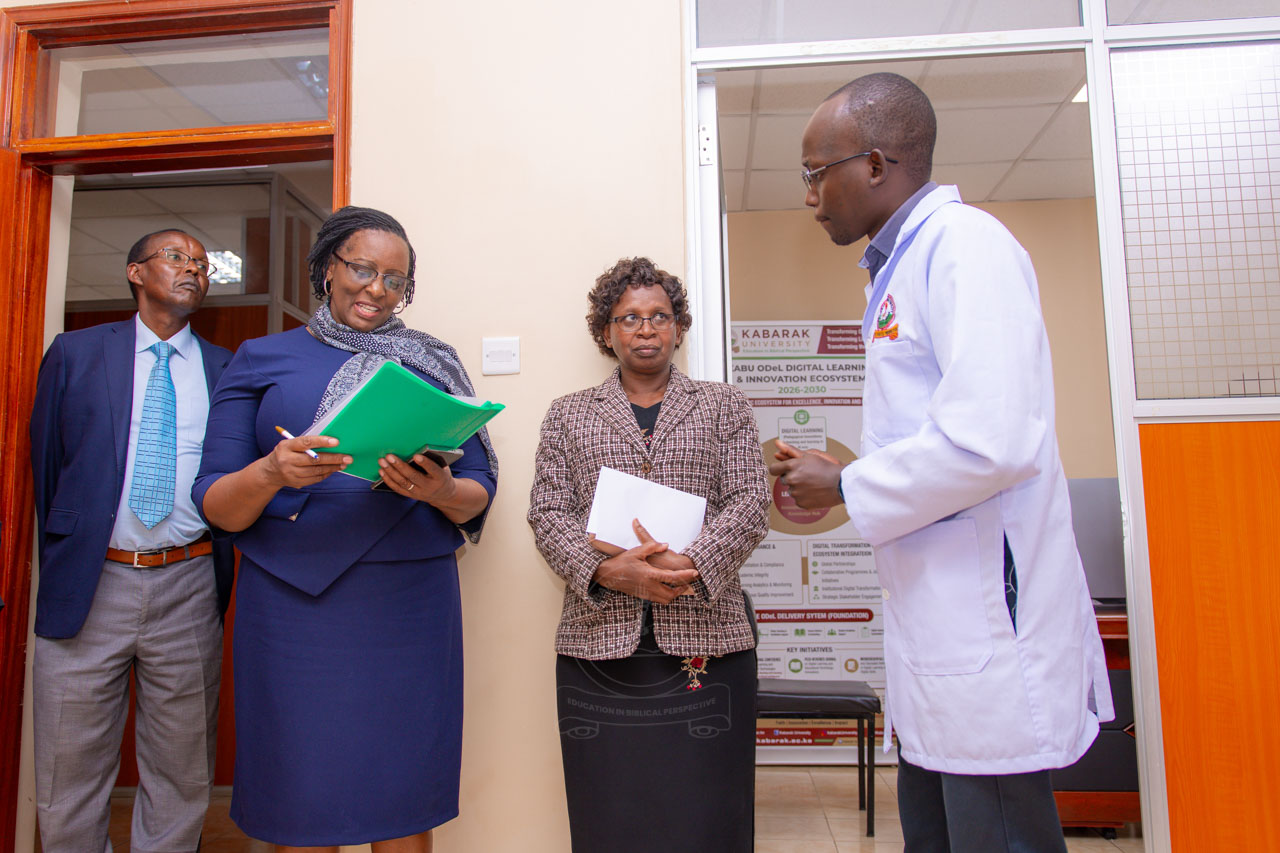
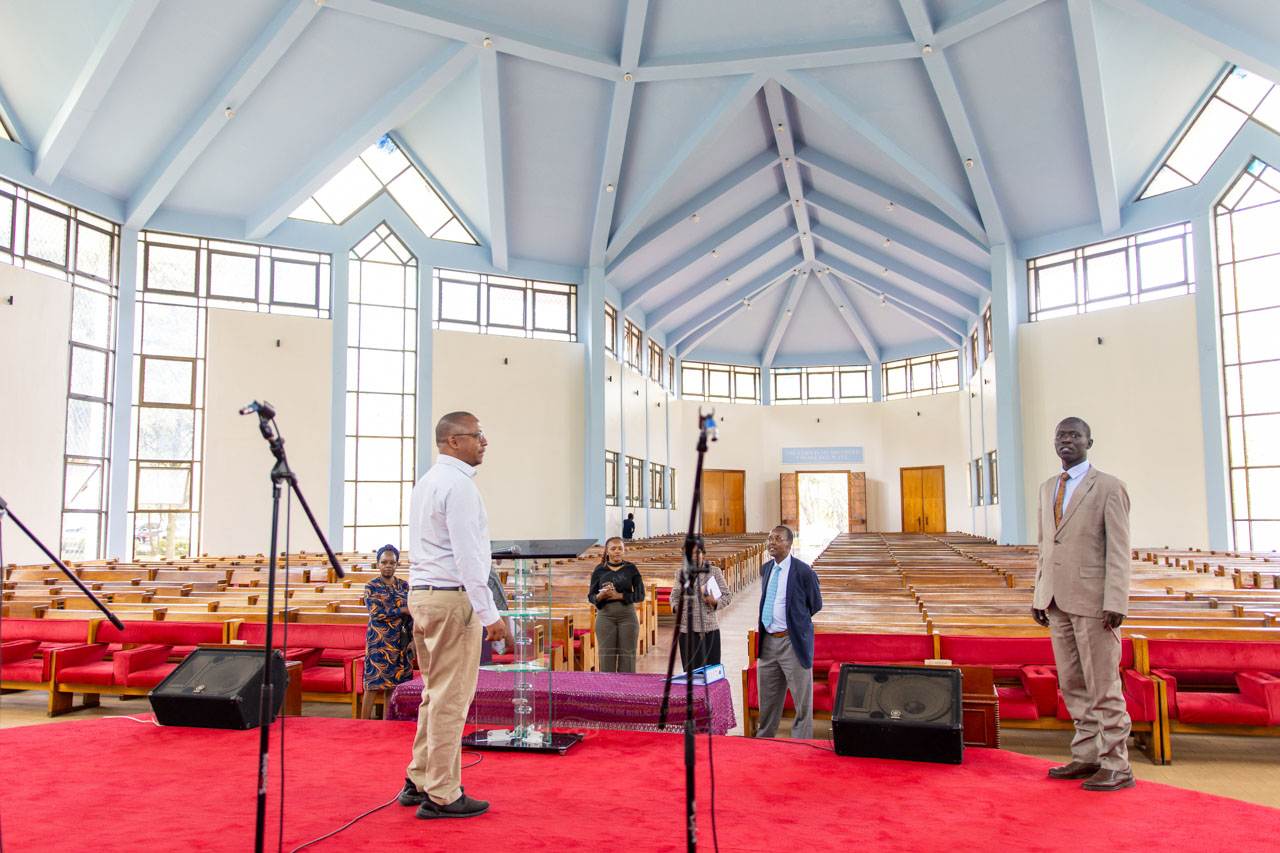
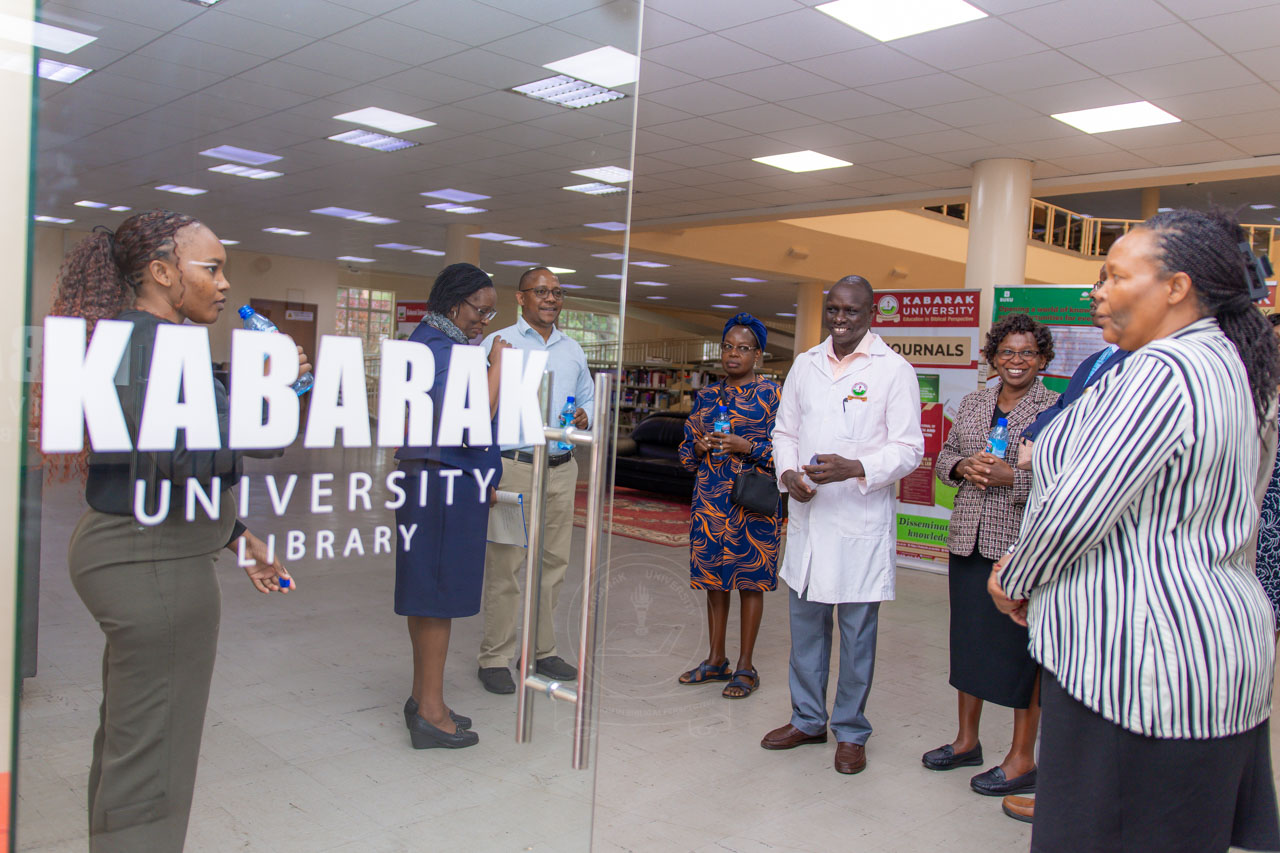
Kabarak University is undergoing a major academic quality assurance exercise following the arrival of a Commission for University Education (CUE) inspection team on 26 October 2026 to verify the academic resources available to support 15 proposed academic programmes.
The delegation was led by Jane Mureithi, CUE Deputy Director for Programme Accreditation, alongside Prof. Willy Muturi, Dr Martin Munyao and Jane Wanjiru.
Welcoming the team to the University, Vice-Chancellor Prof. Henry K. Kiplangat, PhD, MBS, OGW, described the exercise as a significant milestone in the University's academic development. He noted that the 15 programmes represent the highest number to undergo site inspection within a single week in the University's history.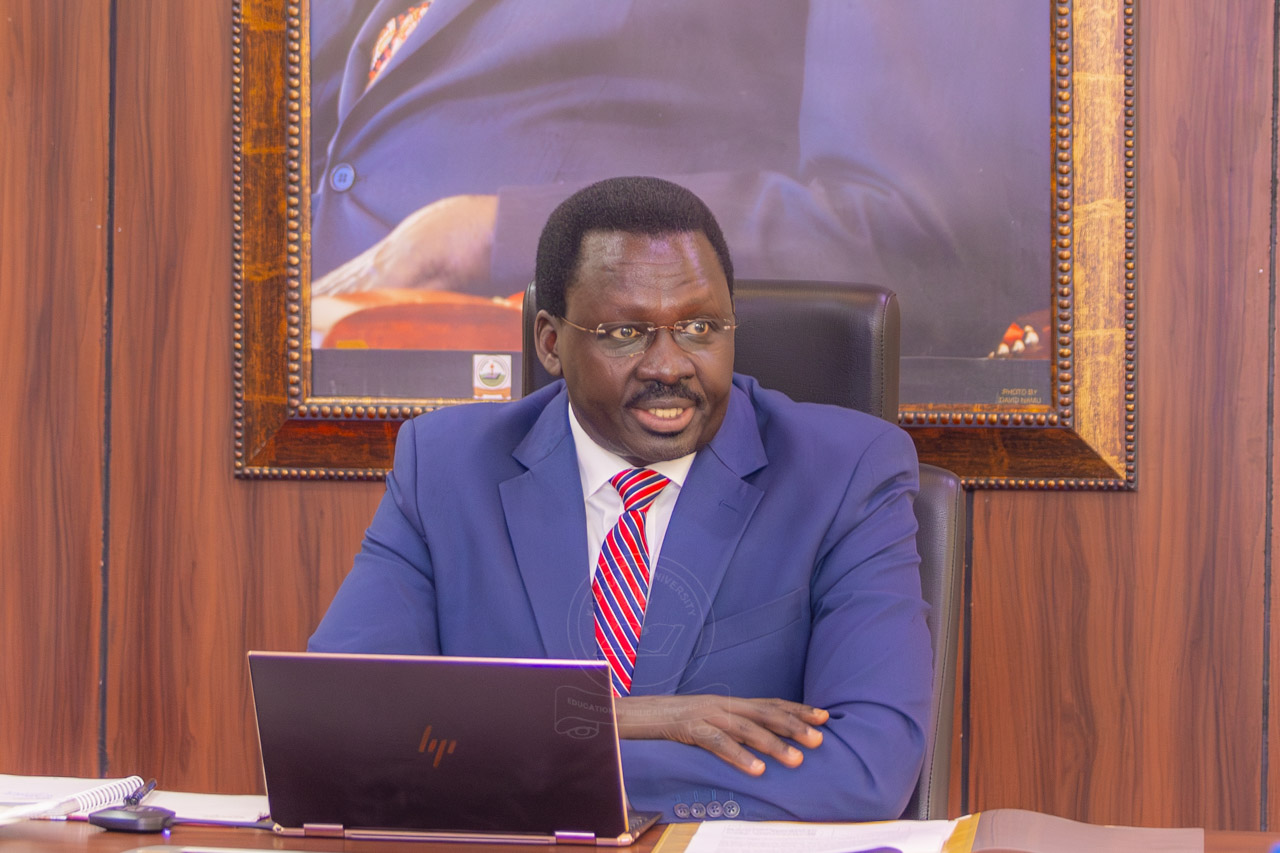
The Vice-Chancellor thanked the Commission for its continued oversight of university education, noting that the regulatory process has contributed to the development of academic programmes and improvements in academic and service quality standards, facilities and learning resources.
The site inspection seeks to verify whether the University has the academic resources required to support the proposed programmes. It also provides an opportunity to assess institutional capacity against the applicable university standards and guidelines.
Prof. Kiplangat observed that the University had made significant progress in meeting these standards while acknowledging that continuous improvement remains essential to the delivery of quality higher education.
“Quality education requires sustained investment in people, infrastructure, and learning resources,” the Vice-Chancellor noted, affirming the University's readiness to take responsibility for maintaining and improving its academic capacity.
He further welcomed the inspection team's observations, stating that any shortcomings identified would be received positively and addressed as part of the University's ongoing improvement efforts.
The exercise reflects the importance of ensuring that academic expansion is supported by appropriate facilities, qualified personnel and the learning resources necessary for effective programme delivery.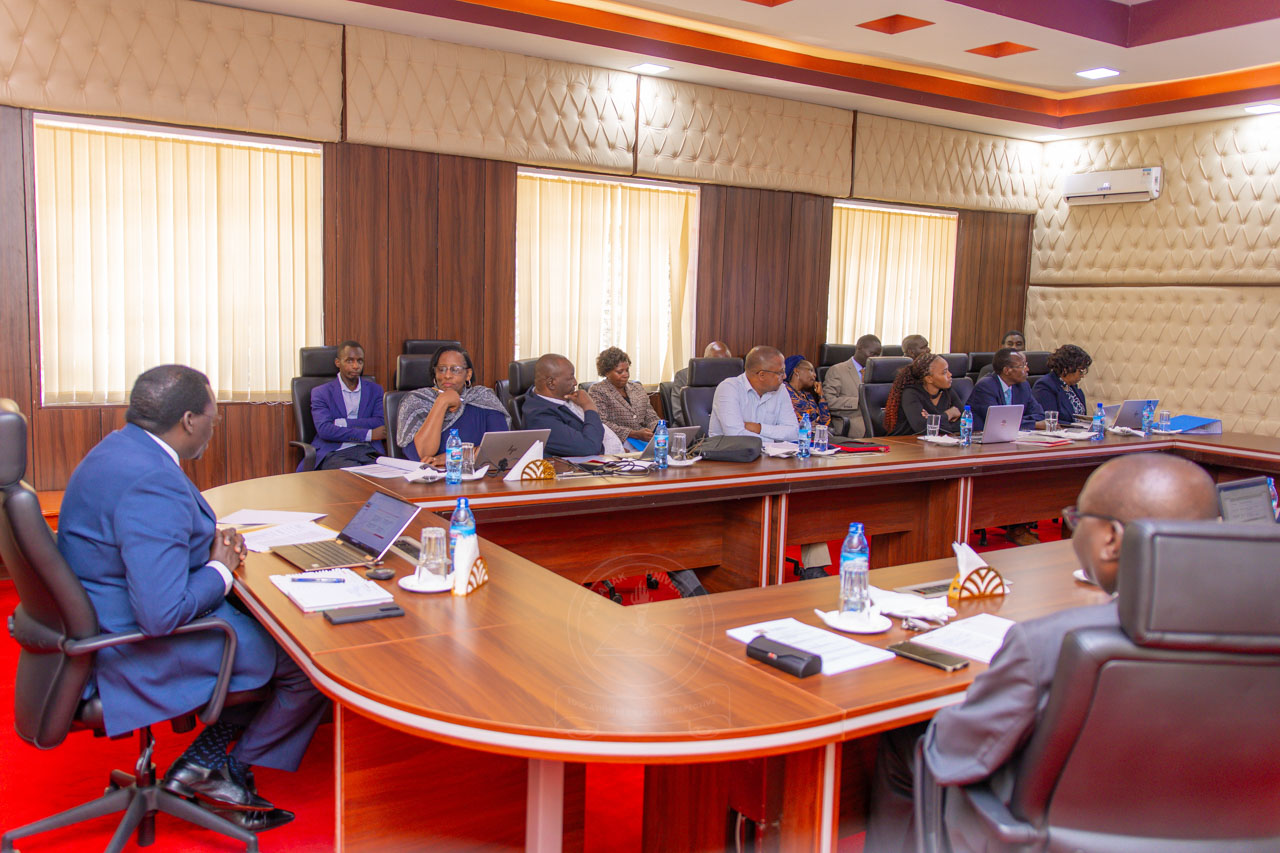
In his remarks, Prof. Kiplangat also highlighted 18 additional proposed programmes awaiting various stages of curriculum evaluation and site inspection. He expressed appreciation for the work already undertaken by the Commission and called for continued progress on the pending proposals.
The programmes cover a broad range of disciplines, including mathematics, health sciences, humanities, business, theology, environmental science, physics, law, dispute resolution, food science, statistics, and nutrition and dietetics.
Among the proposals is the Master of Science in Pure Mathematics, for which the University reported receiving notification of approval and an invitation to submit copies of the curriculum for stamping. Other proposals were awaiting curriculum evaluation reports at the time of the Vice-Chancellor's remarks.
The proposed programmes are at different stages of the regulatory process, and their inclusion in the University's development pipeline does not in itself constitute final approval.
The inspection forms part of the regulatory framework through which universities demonstrate their capacity to offer academic programmes in accordance with applicable standards. For Kabarak University, the exercise provides an opportunity to demonstrate its preparedness, receive professional feedback and identify areas requiring further investment.
The University's approach to academic development remains centred on ensuring that new programmes are supported by the necessary human, physical and academic resources.
Stakeholders and prospective students can explore the University's existing academic offerings through the Kabarak University academic programmes directory. Further information on university regulation and programme accreditation is available through the Commission for University Education.