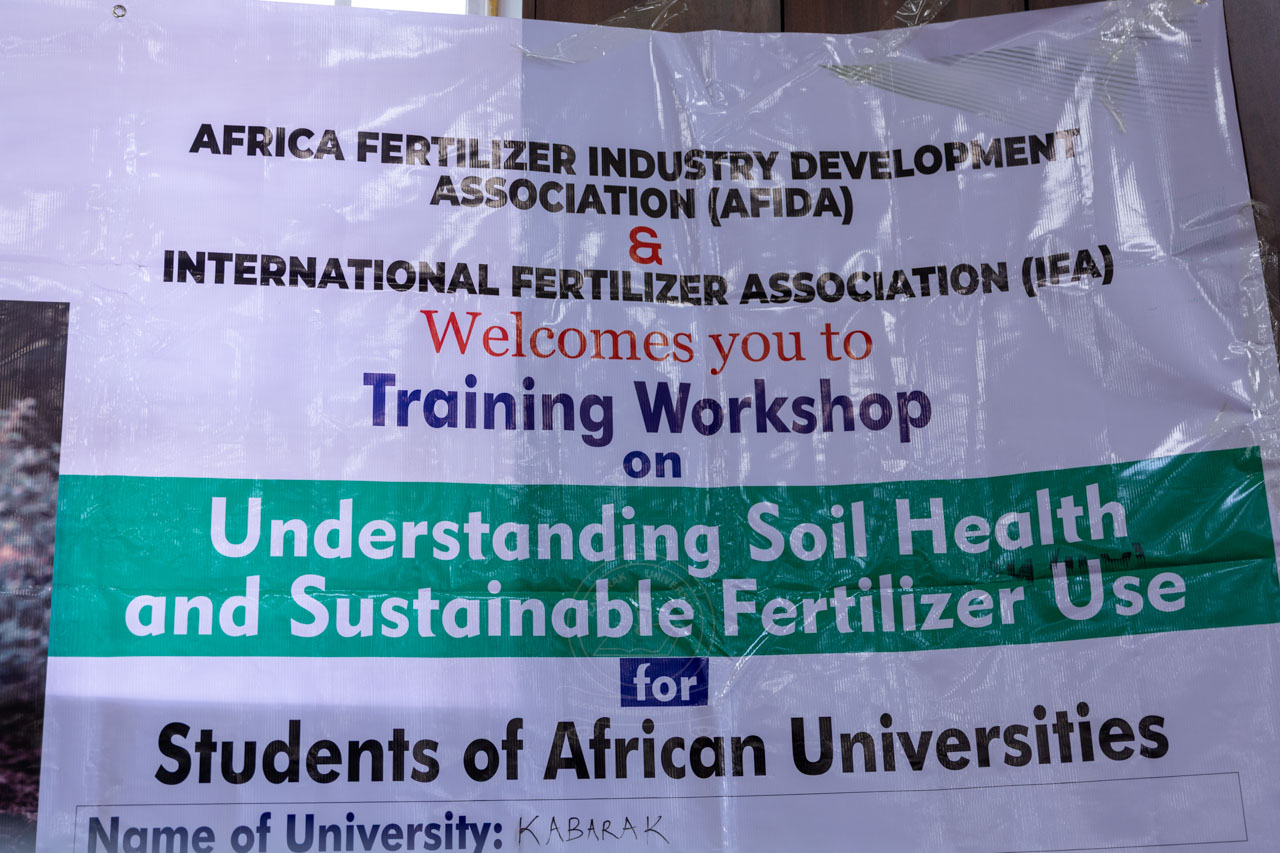


What happens in the field is just as important as what happens in the lecture hall. That was the focus at Kabarak University as Bachelor of Science in Agricultural Education and Extension students took part in a hands-on training session on sustainable soil health and fertilizer use, led by experts from the agricultural industry.
The training was delivered through the Sustainable Fertilizer Academy (SFA), an initiative of the Africa Fertilizer Industry Development Association (AFIDA) and the International Fertilizer Association (IFA). The programme equips young people across Africa with practical knowledge on soil health, fertilizer management, and sustainable farming practices that respond to today's agricultural challenges.
Before the workshop began, the AFIDA and IFA delegation paid a courtesy call to Prof. Gladys Kiptiony, Dean of the School of Education, Humanities and Social Sciences. The meeting explored opportunities to strengthen collaboration between the University and industry in preparing graduates for the changing demands of the agricultural sector.
The sessions were facilitated by Dr. Innocent Okuku, Director General and Chief Executive Officer of AFIDA, alongside Mr. Gideon Kalii, the Sustainable Fertilizer Academy Training Programme Facilitator in Kenya.
Students engaged in discussions on fertilizer fundamentals, corporate sustainability, the role of fertilizers in sustainable development, biodiversity, nutrient recovery and recycling, and the use of data to improve precision crop nutrition. The conversations connected classroom concepts with real industry practice, giving students a broader perspective on how modern agriculture is evolving.
Beyond the technical knowledge, the training challenged students to think about agriculture as a field that brings together science, innovation, environmental responsibility, and food security. It also allowed them to interact directly with professionals who are helping shape agricultural development across Africa.
Through partnerships such as this, students graduate with more than academic knowledge. They leave with practical experience, professional networks, and the confidence to make a meaningful contribution to the future of agriculture.