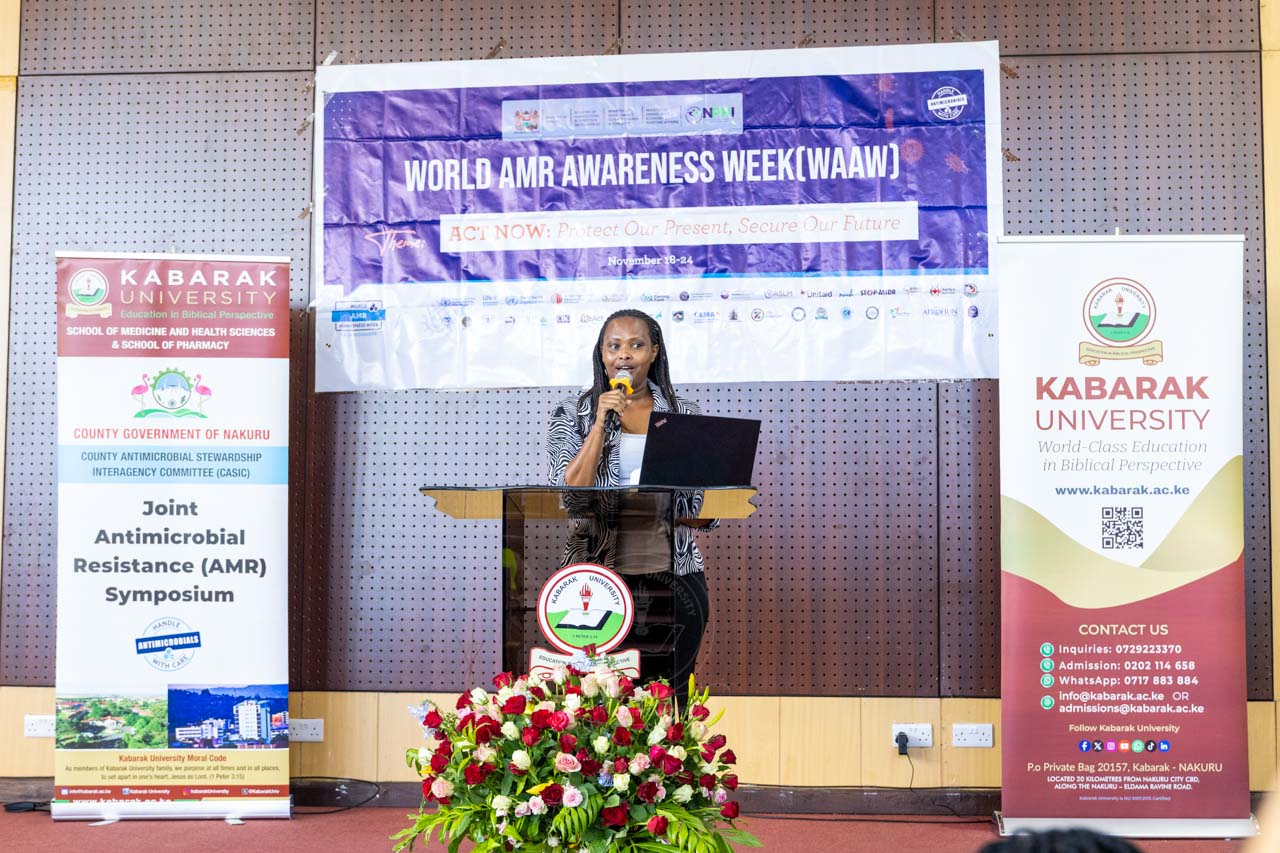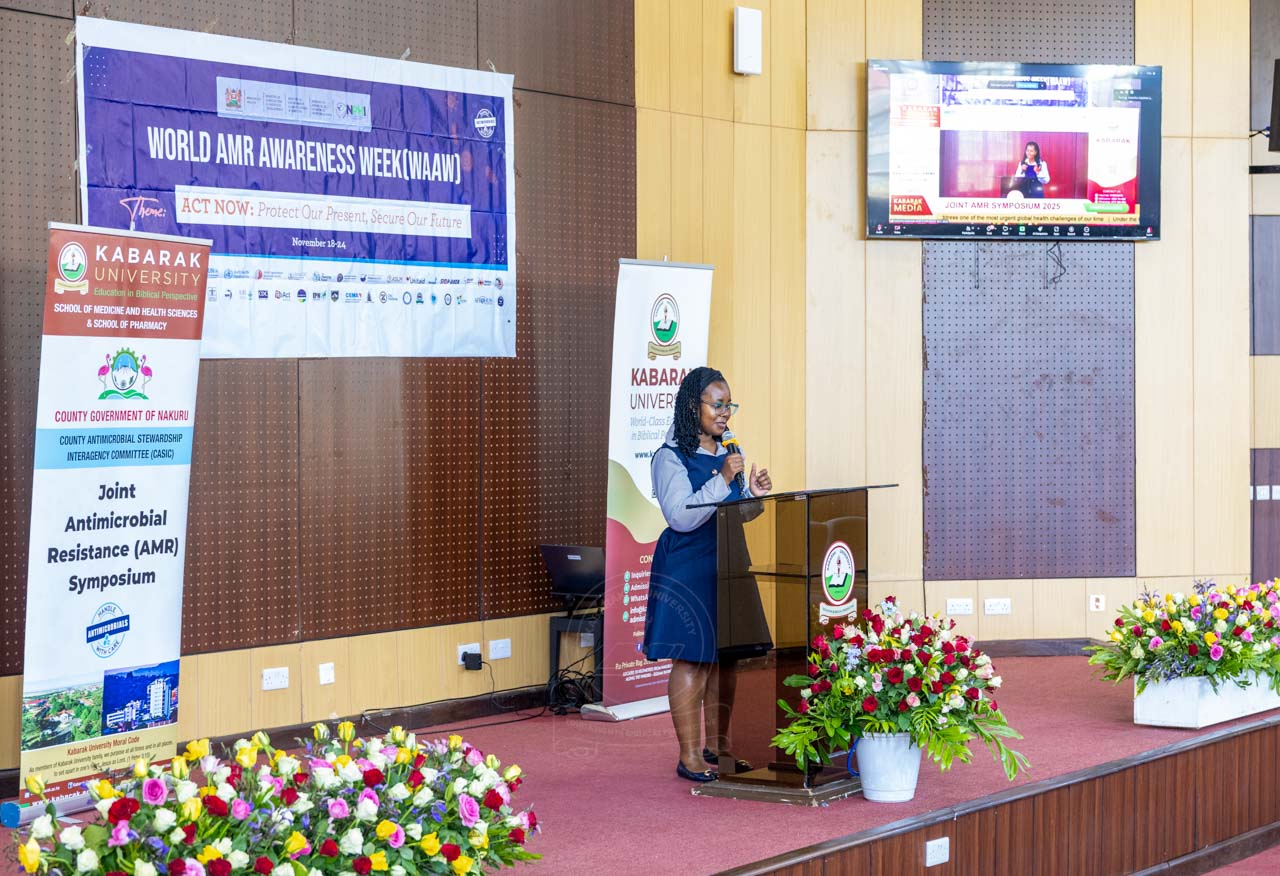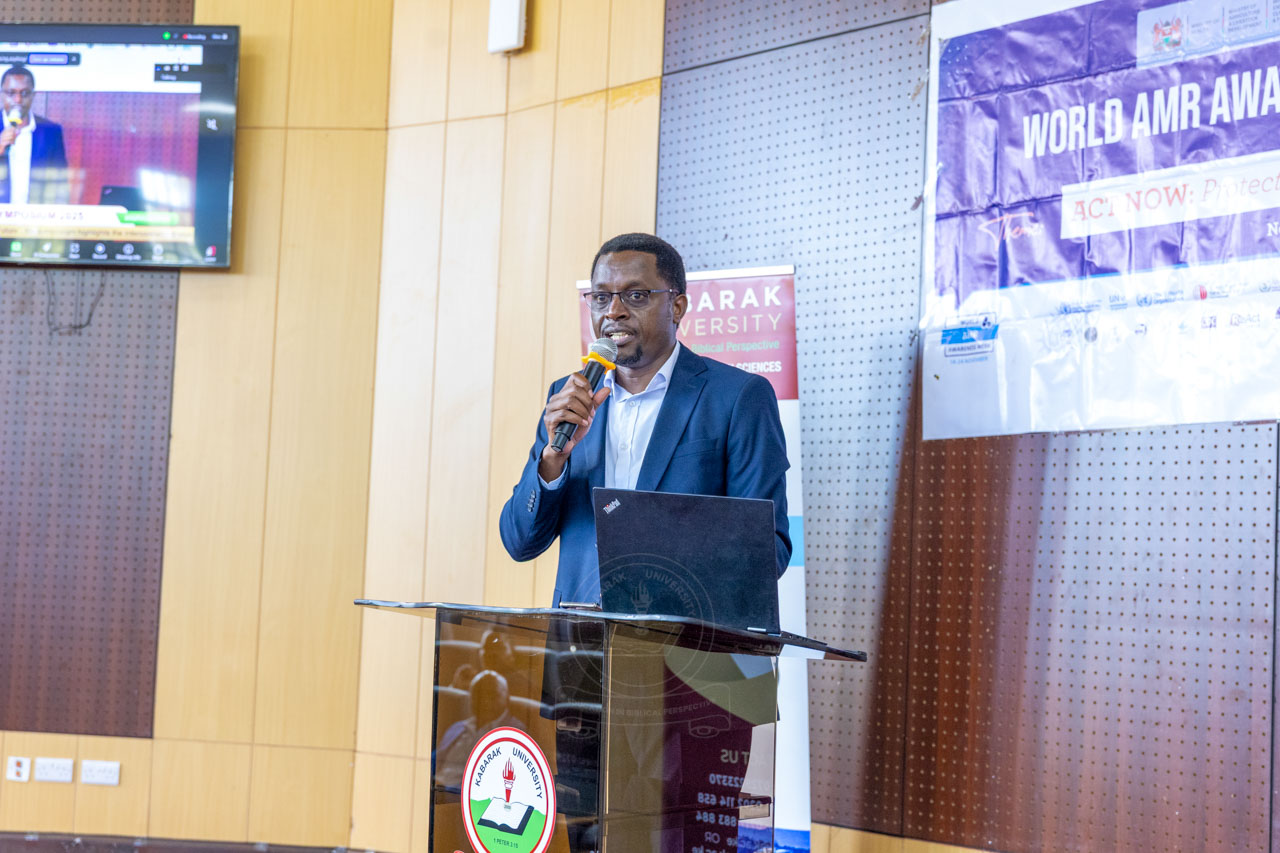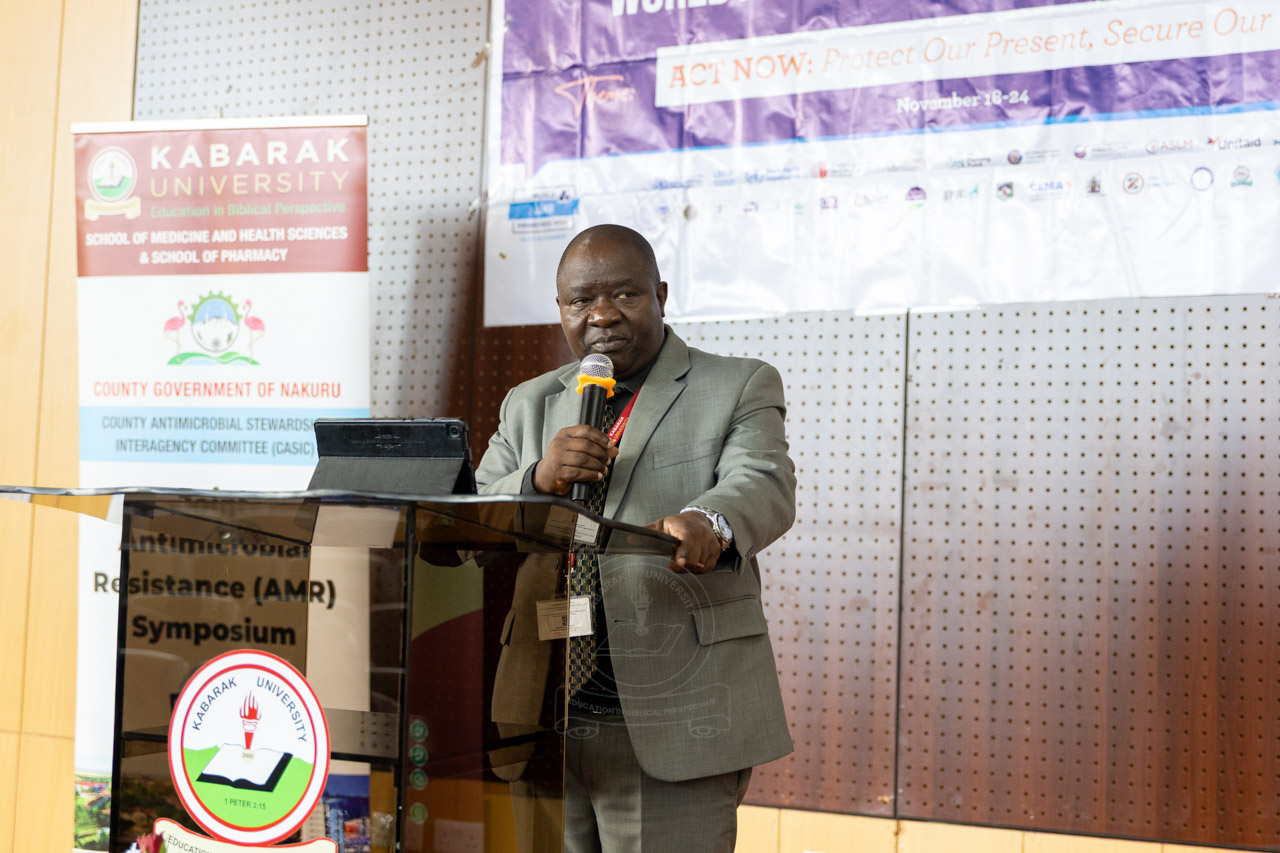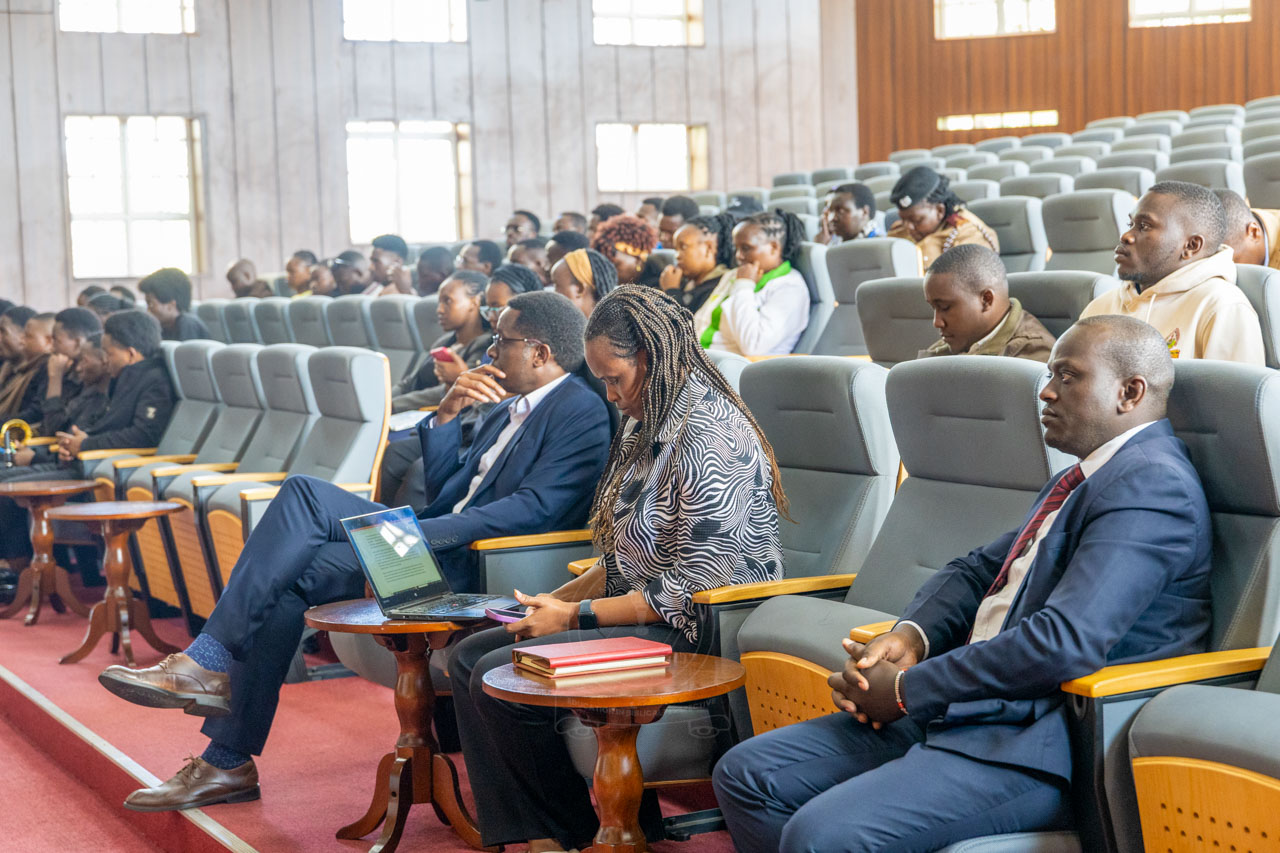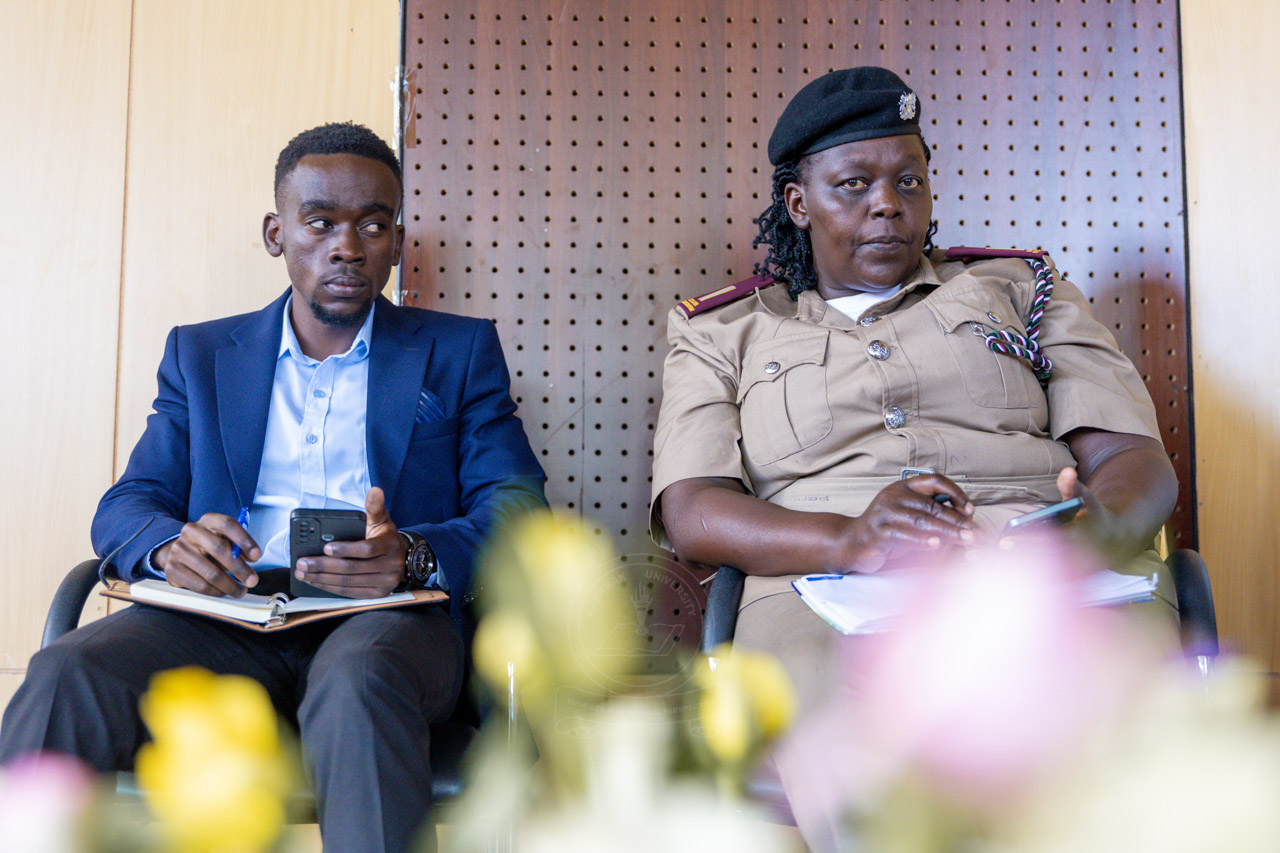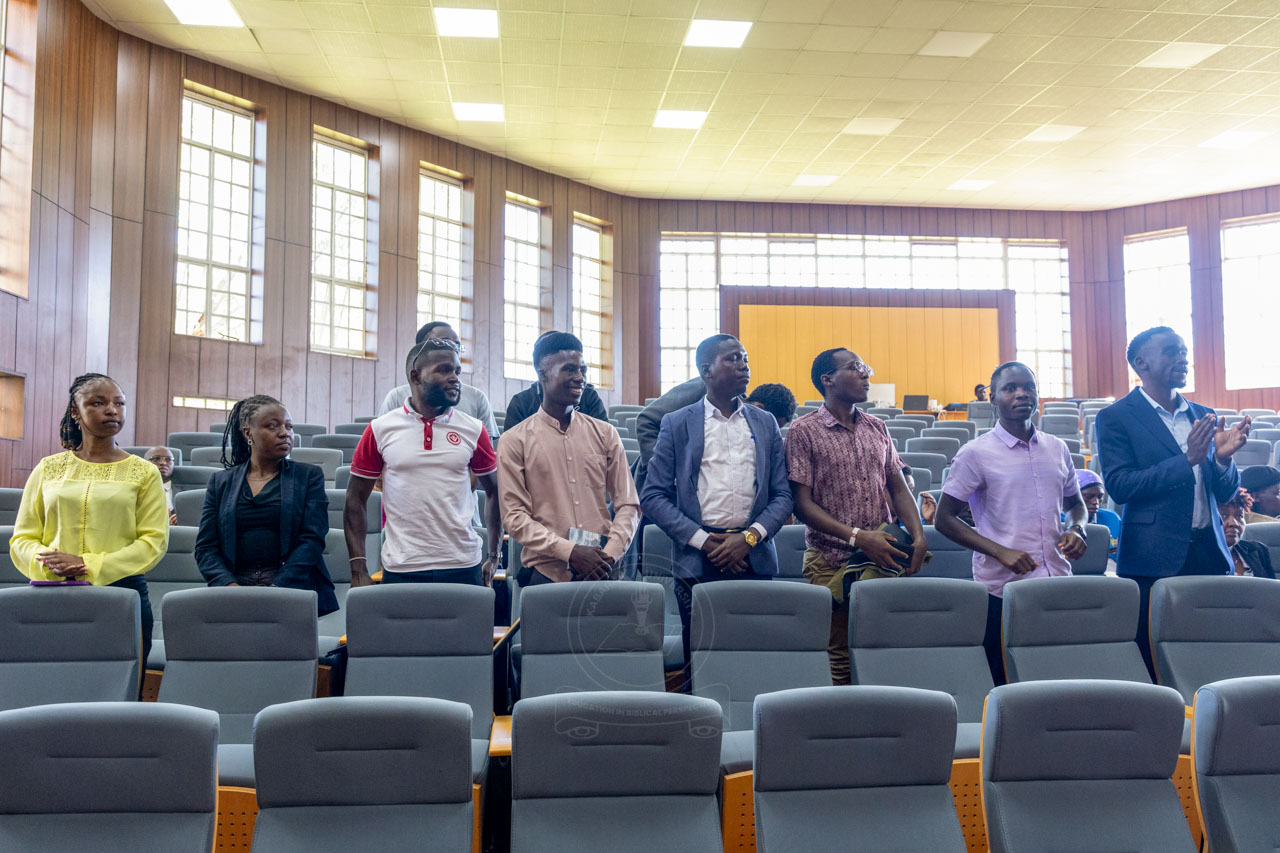
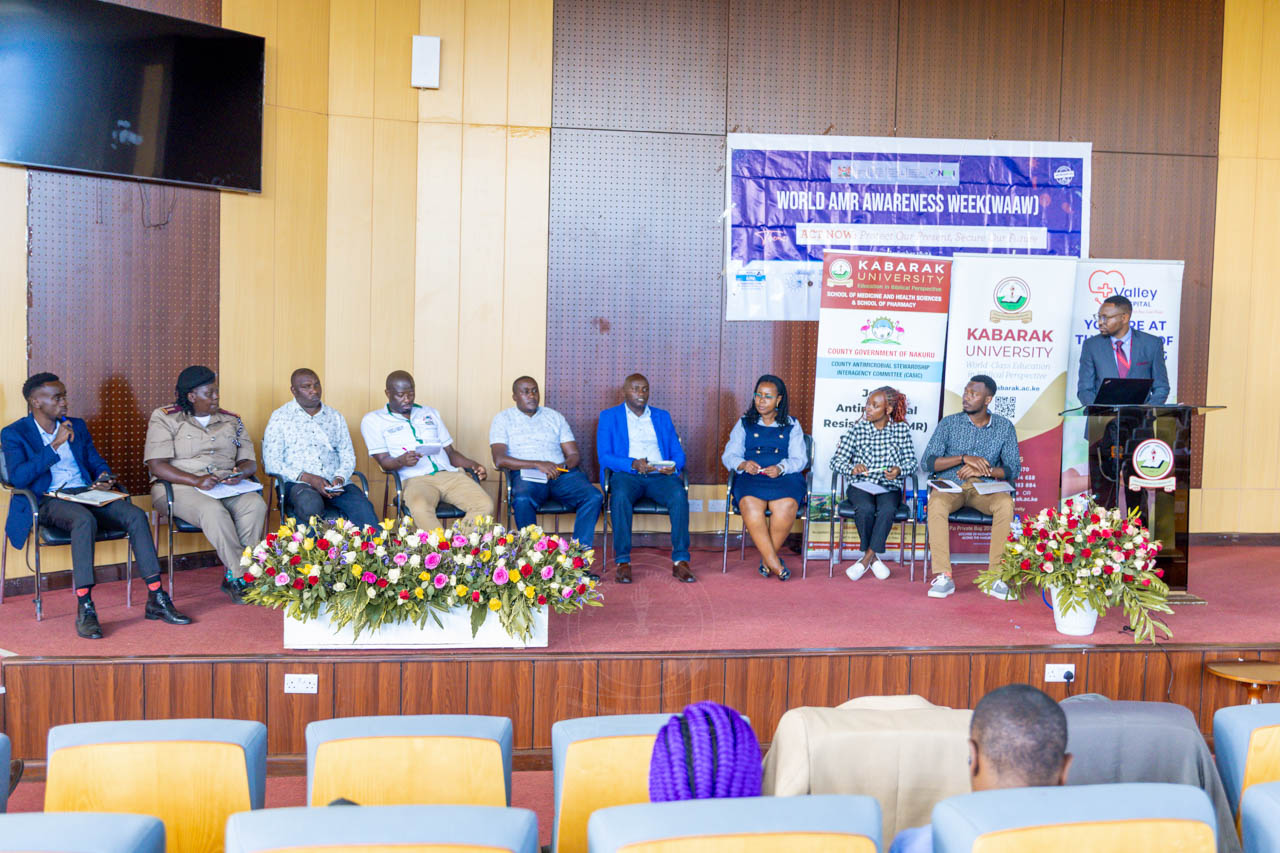
Kabarak University, in partnership with the County Government of Nakuru, successfully hosted the Joint Antimicrobial Resistance (AMR) Symposium 2025 on 9th December 2025 at the Kabarak University Main Campus. The event drew together experts, policymakers, researchers, healthcare professionals, veterinarians, academicians, university students, and community stakeholders for an in-depth discussion on one of the most urgent global health challenges of our time: Antimicrobial Resistance.
Held under the theme Act Now: Protect Our Present, Secure Our Future, the symposium highlighted the urgent need for coordinated, multisectoral action to tackle AMR. As microorganisms continue developing resistance to treatments that were once effective, AMR threatens global health, food systems, and economic stability. The discussions strongly emphasized the One Health Approach, which recognizes the interdependence of human, animal, and environmental health in developing sustainable AMR solutions.
 |
 |
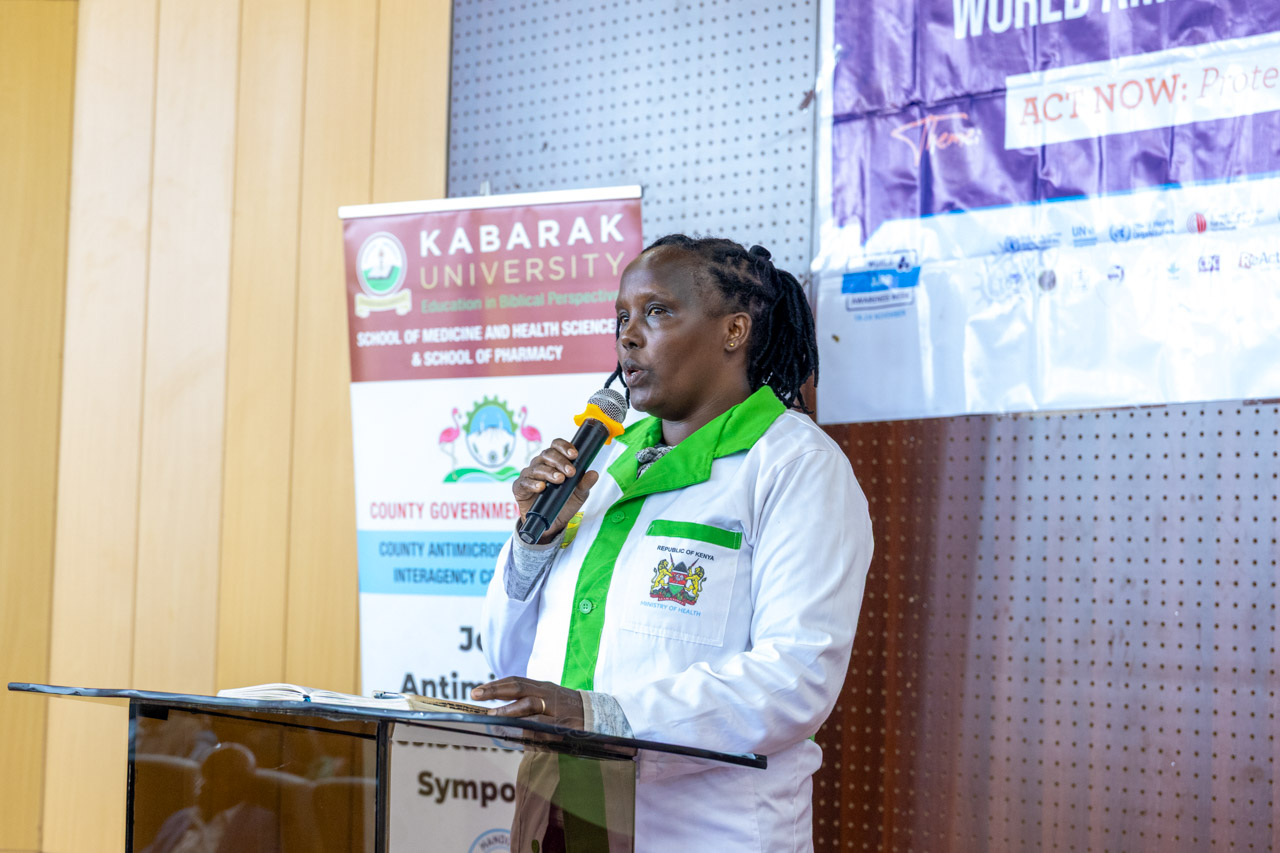 |
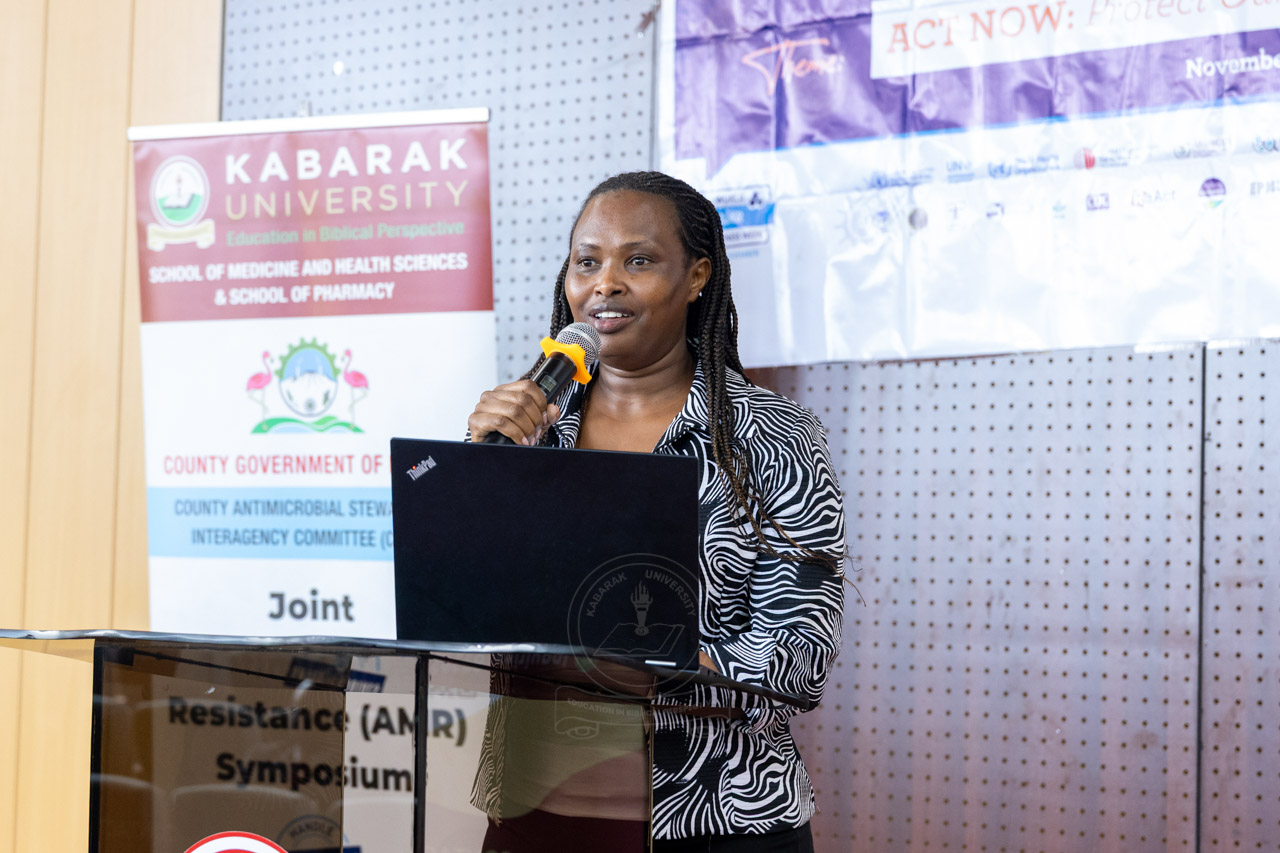
The symposium was officially opened by Prof. Pamela Kimetto and Dr. Titus Suge. The County AMR Focal Person for Human Health, Dr. Lydia Momanyi, played a key coordinating role and highlighted county-level progress and priorities in AMR prevention and control.
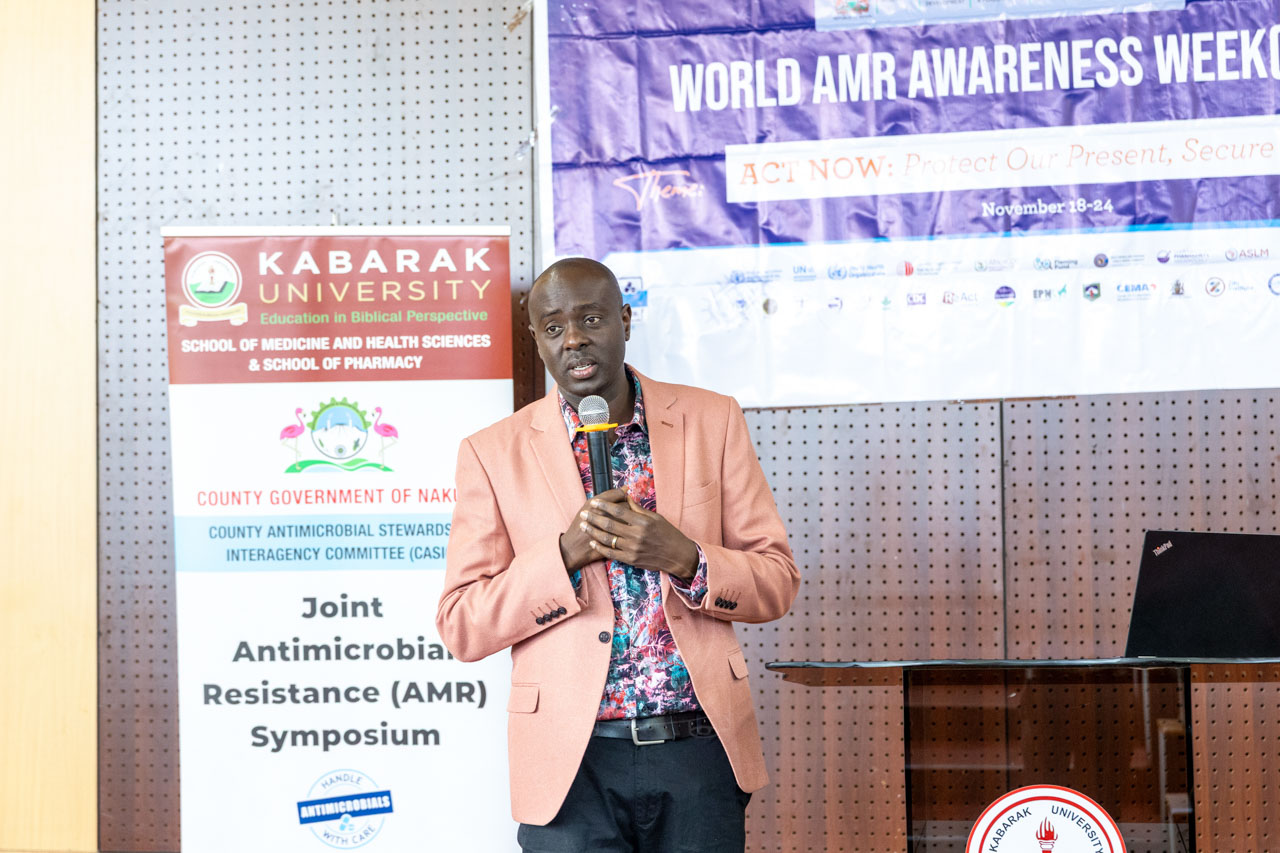
A key highlight of the day was the keynote address delivered by Dr. Immanuel Tanui, representing the National Antimicrobial Stewardship Interagency Committee (NACIC). His presentation provided an insightful overview of the national situational analysis on AMR, progress made so far, existing gaps, national strategies for combating AMR, and a renewed call to action for all sectors to strengthen stewardship efforts under the One Health framework.
The program also featured panel discussions involving AMR Focal Persons from Animal Health, Human Health, and Agriculture, who shared sector-specific insights and practical strategies for enhancing surveillance, promoting responsible antimicrobial use, and strengthening community engagement.
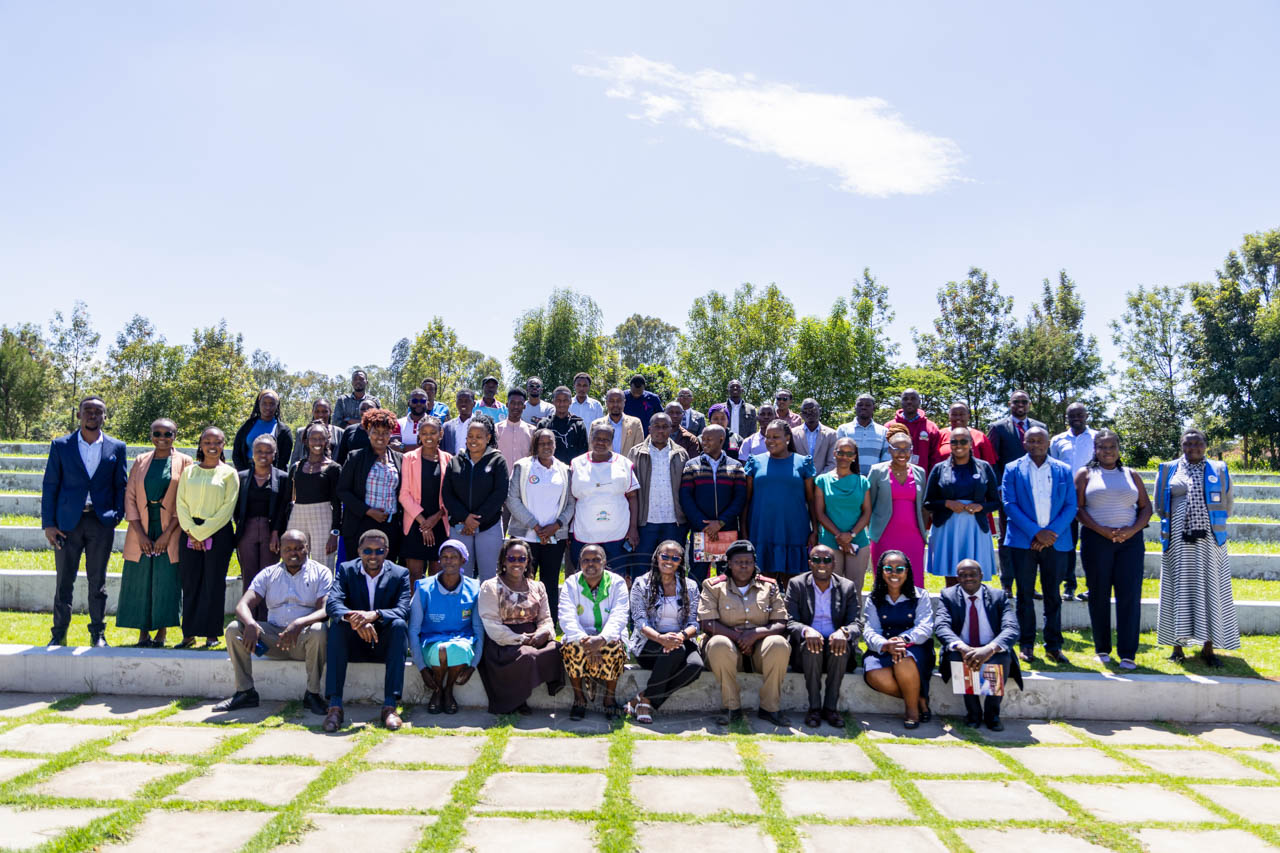
Other distinguished guests included members of the Kabarak University academic staff and the Hero Club, students from Egerton University, representatives from Avenue Hospital Nakuru, and local government leadership (NGAO).
Kabarak University, through its School of Medicine and Health Sciences and School of Pharmacy, emphasized its dedication to supporting national and global AMR priorities through research, training, and active participation in policy dialogues. The University continues to invest in preparing the next generation of healthcare leaders equipped to respond to emerging health threats.
Kabarak University extends sincere appreciation to all partners, speakers, organizers, and participants whose contributions made the symposium impactful. The event stands as a testament to the power of collaboration and the shared resolve to safeguard the health of current and future generations.